Friday, 5 March 2010

Animatic


Audience feedback:
We were adviced to input an explanation as to wht there is a killer there and what their motives are.
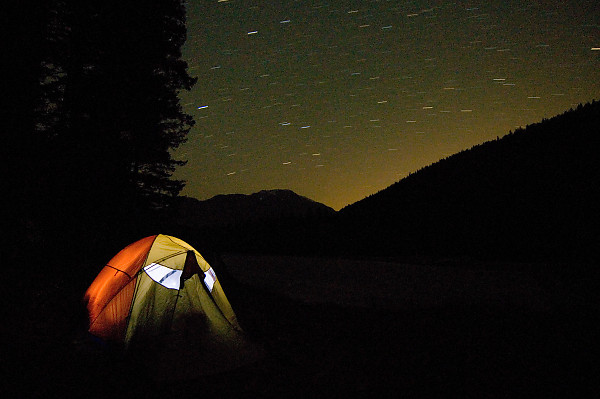
We were also adviced to test out the location, possibly using a blue colour filter.
We were adviced to add into our narrative an example of a false scare.
Somebody suggested that our plot may appear silly and comical to an audience, therefore we will be consious of this when producing the opening and make sure that it is portrayed more seriously.
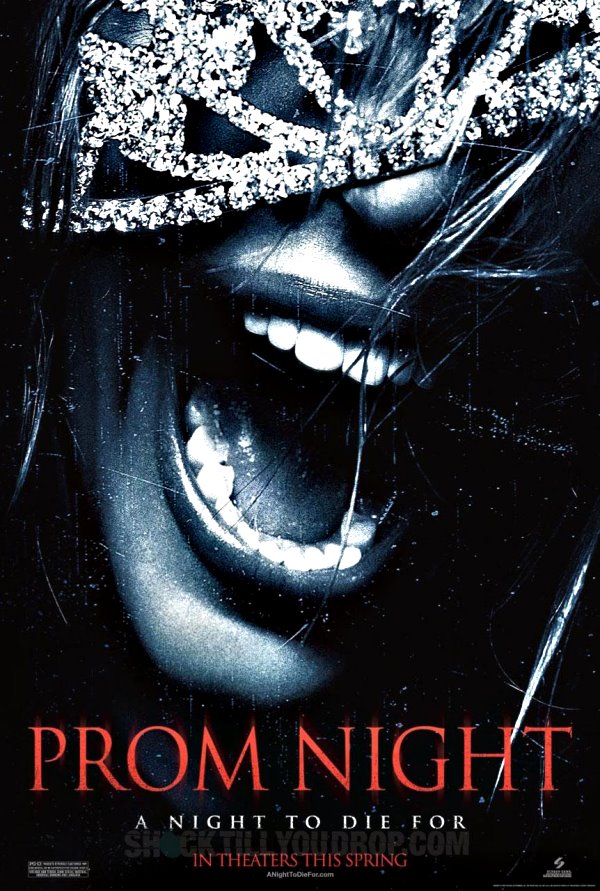
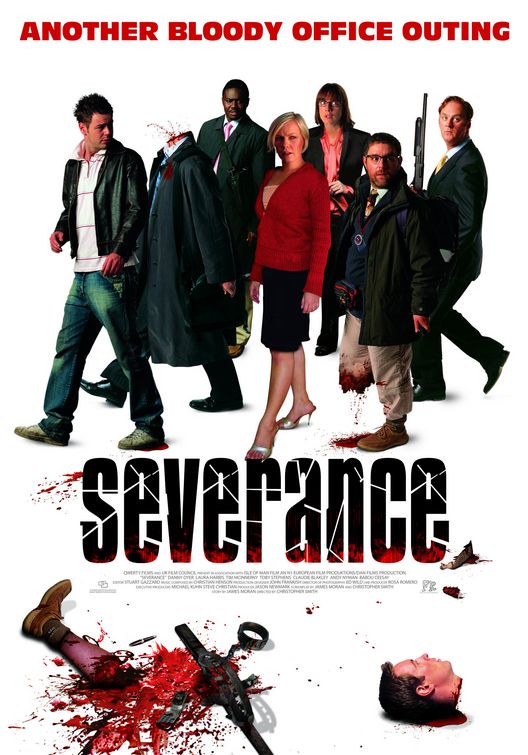
They suggested we watched these films for some inspiration for how to produce our film opening:

Monday, 1 March 2010

Revised narrative outline

We went with my pitch, therefore we are filming the opening of the film in which a group of teens go camping.
Most of what i wrote in my original pitch will be filmed in the same way, the plotline remains the same, howeve since doing our research there are certains aspects we have decided to input and some we have removed.

We have altered the my idea from having any actual shots of the killer to just having point of view shots to signify the group is being watched. This will help to achieve narrative enigma which increases the tense atmosphere of the film opening.

We also altered my idea of not showing her being killed and just showing her being followed to actually putting that in in because, as it is a slasher movie they don't typically tend to avoid a killing with in the opening self contained narrative sequence, todays teen audiences crave more blood and gore.


We hope to do it in a similar style to this killing in 'Friday the 13th'. We like how the killer is framed so the action of the knife slashing the girl is seen from behind. This would be an easy way to achieve verisimilitude, and the audience would believe she is actually being killed.


Another idea we gained from a killing in Halloween, is to have the blood splatter across an object close-by, this achieves gore without having to show the actual knife penetrating the female. We would have to use blood splattering on a tree instead as thats more appropriate for our setting.


We also liked the idea of having the killer wiping blood from the knife and walking away from the scene leaving the body lying there, we saw this in Scream. At this point we would do a close-up of the body and fade to black and the titles will come in at this point.


We have decided to signify our 'final girl' to the audience as the one who will survive, by adding some narrative in which she turns down an offer of alcohol or drugs, or both. Many people who have seen horror movies before will pick up on this preffered reading, as it is such a stereotypical character.


We have decided to signify our scream queen by filming her emerging from behind a tree or bush putting clothing back on to signify that she has just had sex. We have put this in because the codes and conventions of horror often have the females who are sexually active killed of first. 

Friday, 26 February 2010

Genre Research and intertextual links

There is one shot type which is common place in horror films, this is a point of view shot, from the killer. Often it will be filmed with shakey camera work to signify realism, and will also often zoom in from a distance to signify that they are approaching their victim. The opening scene of 'Halloween' is a perfect example of this. That scene was shot by somebody wearing a camera themselves, filming whilst walking around and also acting out the killing. But it is also seen numerous other films such as; Severance, Friday the 13th, Cry Wolf, etc.

A specific style of music is associated with films of a horror genre, the aim of the music is to interfere with the viewers heartbeat therefore making them tenser. Not one horror film doesn't use music o build up tension which shows just how much of a dramatic affect it has.

Horror films frequently use the same settings over and over again, these key settings are; graveyards, woods, houses, motels, country lanes, dark night time, stormy weather, full moons. These are unsettling locations as they are often remote, and the lack of lighting prevents the characters from being able to see what is going on. Full moons and graveyards also have links to the supernatural.

The film 'Halloween' is based around the night of 'Halloween' itself as it has spooky, supernatural routes, associated with terror, as is the date Friday the 13th as it's associated with bad luck.

Some films have taken normal everyday settings and turned them into horror films, which makes the films unusual. Films such as:
  • Creep [Set on the London Underground]


    Many horror films use 'false scares' or as they're sometimes known, 'Cat scares'. They're put into moments of high tension to make both the victim on screen and the viewer believe that something is about to attack the victim. This is seen in the following films:
    • Club Dread [In the opening scene, a monkey jumps out trees]
    • Bride of Chucky [In the opening scene, the radio goes off when everything is silent]
    • Halloween 2 
    • Scream
    In many slasher films the killers are stereotypically similar;
    • Most are male
    • Most conceals their identity, often with a mask 
    [Micheal Myers in Halloween] 

    [Scream killer] 

    [Jason Voorhees in Friday the 13th]

    • Many wear black/dark clothing, and in the style of scream, full length long cloak type of clothing
    • Many killers opt for hand held weapons such as, blades, axes, chainsaws, machetes, etc. And also use the same one throughout, for example in 'Nightmare on Elm Street' the killer uses the razor sharp glove for every killing


    • The documentary 'Going To Pieces' outlines an idea, whereby the male killer is in some way sexually jealous and/or frustrated, and takes it out on the female victims who are sexually active. This is why the virginal final girl is capable of outsmarting the killer. It also suggests a clearly sexist view behind many slasher films, telling women that they shouldn't be sexually active.
      Blue or green colour filters are frequently used in films to signify horror as they create a cold atmosphere. They're seen in films such as, 'Cry Wolf' 'Bride of Chucky' and 'Halloween'.

      The conventions of horror are so clear cut, there is even a book called 'How to survive a horror movie', by Seth Grahame Smith. It is based on the most famous horror movies such as 'Halloween' and 'Nightmare on Elm Street'. It outlines the 7 deadly sins the characters who are destined to die, embody. These are:


      1. Doubt - Those who believe the horror stories are further down the road to survival that those who doubt them
      2. Machismo - believing that you are capable of defeating the killer with, for example, 'football skills'
      3. Independence - going off on your own = death
      4. Ugliness - being unattractive makes you a target to any killer
      5. Curiosity - investigation = mutilation
      6. Irresponsibility - you must carry out the task you've agreed to do or you or someone else is going to die
      7. Vehicular Sex - do it and die, having sex in a car is guaranteed to result in death
      The film 'Scream' plays on the fact that most teen audiences are well aware of the codes and convensions of horror movies. This clip from the film shows just how clear their understanding of the genre is:
      A successful horror movie will ususally include the following aspects:
      • Teenage characters
      • Sex
      • Drink and drugs
      • False scares
      • A scream queen
      • A virginal final girl
      • An unidentified psychopathic killer
      • A figure of authority
      • A and help penatrative weapon eg. knife
      • Steroetypical quotes "Who's there?"
      Assessment Criteria


      The Brief:  
      Preliminary exercise: Continuity task involving filming and editing a character opening a door, crossing a room and sitting down in a chair opposite another character, with whom she/he then exchanges a couple of lines of dialogue. This task should demonstrate match on action, shot/reverse shot and the 180-degree rule. 
      Main task: The titles and opening of a new fiction film, to last a maximum of two minutes.

      The coursework counts as 50% of our overall mark and is marked in 3 sections:
      RESEARCH AND PLANNING: 20%
      PRODUCTION: 60%
      EVALUATION: 20%

      For our evaluation there are seven questions we need to answer, and to make it easier for us throughout the task we need to refer to these after everything we do, this is to make it easier for us when writing it up at the end of the task. The seven questions are:
      • In what ways does your media product use, develop or challenge forms and convensions of real media products?
      • How does your media product represent particular social groups?
      • What kind of media institution might distribute your media product and why?
      • Who would be the audience to your media product?
      • How did you attract/address your audience?
      • What have you learnt about technologies from the process of constructing this product?
      • Looking back at the preliminary task, what do you feel you have learnt in the progression from it to the full product?

      Monday, 15 February 2010

      Initial ideas for film openings

      My first 3 ideas for film openings are:

      My first idea is that 3 teenage girls are driving at night when their car runs out of petrol, so they would pull into a service station, whilst they were in the store a man would go out and drain the petrol tank without their knowledge so they wouldn't be able to drive much further. When they approach the camera in a shot reverse shot  sequence, i would pan out so behind the counter would be visable, and reveal a body covered in blood laid there.

      Following this opening, the men from the petrol station would follow them and when they ran out of petrol again and have to pull over and discuss whats going on, the men would then follow them, rape them and kill them. One would be left alive in typical horror style.


      My second idea involves a group of teenagers, they would go camping on some moors. When they arrive at the car park there would be another car parked up and i would include shots of the man in the car to show that he is watching them. Then whilst the group were setting up camp i would have some shakey camera work watching them through trees and this would signifiy that they were being watched, and the preffered reading would be that it was the man in the car. One girl would go off to collect wood for a fire and the man would follow her.

      Following this opening, the man would catch her and kill her, then other people in the group would discover her body and they would try and leave but their car would be gone and each of the group would subsiquently be killed off by the man following them, however one of the girls would remain alive in the end.


      My third idea would be set on a train, a group of teens would get on ready to go for a night out and all sit down in one carriage, then one of the boys who had drank alot of beer would get up to use the toilet and as he is walking down the train her spots and girl sprawled out on the floor, he goes over to check if she ok and realises she is dead. He would look around and spot two more dead bodies and run back to the group. None of them would believe him until one follows him to where he said the bodies were but then they would be gone. He would tell them that he doesn't want to be on this train anymore and that he wants to go home so at the next stop would try to get off but all the doors would be disenabled.

      Following this opening, the group would each be killed off by the people on the train.


      The idea i will go with for my pitch is the second, I chose this because;


      • there is availability for representation of the social groups of teenagers, such as alcohol and drug use as well as sex references and strong language used
      • It allows us to input characters, stereotypical of horror genre such as the 'scream queen' and the 'virgin' who survives
      • the cast would be easily available to us as we could use other 6th form students
      • locations would also be easy as we could use the moor and the carpark opposite the cow and calf
      • the problems we face with this are, that in order to achieve verisimilitude we will need to get people who can drive up to the moors, camping equpiment and alcohol/fake drugs
      • we will need to compose some music for the scene where the psycho is stalking the young girl, also we will need to play a clip of music on repeat in order to avoid breaking copyright laws
      For the first idea we would need to have found a petrol station, in a remote location, willing to let us film, and for the third we wouldv'e needed an empty train, both of which may not be easy to get hold of.

      Sunday, 14 February 2010

      Genres + openings: codes+ conventions


      Horror genre:
      From the films i have watched the codes and conventions of the openings are; to open with a section of self contained narrative which is either from the middle or the end of the fim and then switch back to the begining. This brings the film straight into the dis-equilibrium stage which has the effect of making the viewer instantly uncalm. This is used in these films:
      • Cry Wolf


      • Severance
      Alternatively some films begin with a section of self contained narrative from the past and then begin the start of the film narrative. This is the case for the following films:
      • Friday the 13th


      • Halloween
      • Van Helsing


        In order to keep the audience interested in the film and feeling uneasy and tense, these self contained narrative sections in the openings often show a killing within the first few minutes, this occurs in films such as:
        • Friday the 13th
        • Club Dread
        • Bride of Chucky
        • Scream


          Horror genre films do not tend to have the central protagonist on screen first as they often begin with a killing and a central protagonist would not be killed off in the first 5 minutes of a film.

          Friday, 12 February 2010

          General codes + conventions of film openings


          From watching film various film openings i have discovered that:
          • One of the most popular means of providing the audience with exposition in order for them to follow a prefered reading is by, placing text on screen, which is seen in; Halloween, Maltese Falcon, Clerks, Club Dread and more.
          • Other methods are to use a voice over, this is used in 'Hot Fuzz'. To input the information onto the characters dialogue, this is used in 'Where the Heart is'. However these methods can create chunky bits of dialogue, instead of avoiding it. Or to leave it to the Mise-en scene, but this method doesn't always anchor the meaning.
          • Self contained narrative sections are used in most film openings
          • Titles are often placed on screen at the beginning or end of the self contained narrative section, this is generally text on screen, one film which used a variation of this is, 'Napoleon Nynamite', they created text through the use of food instead.


          • Films which don't follow a cronological order in the beginning can have a self contained narrative from another part of the film narrative, somewhere between the middle and end, an example of a film which begins with a section from the end of the film is, 'Severance'.


          • To keep the film opening from becoming dull, shot variation is used in mostly all films. One film which has no shot variation, and follows the same take for an entire 5 minutes is 'Halloween'.
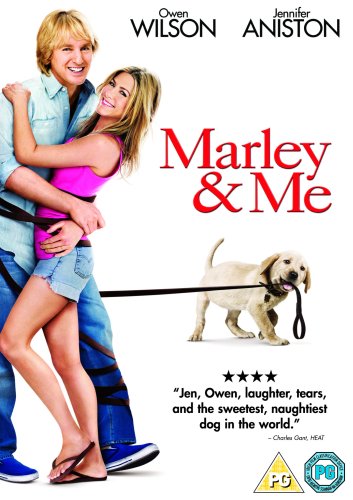
          • Some films begin with a narrative section from the past, an example of this is, 'Marley and Me'.

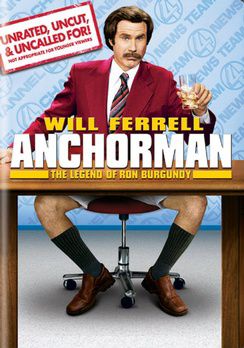
          • The first character on screen is usually signified as the central protagonist, for example, 'Anchorman' which begins with several short clips of the same character 'Ron Burgundy', and 'Burn After Reading' which signifies a central protagonist without even showing his face, by tracking his feet as they walk down a corridor. There are however examples of films which do not feature the central protagonist as the first person on screen, such as, 'Club Dread' which shows a couple as the first 2 characters on screen, but they're killed off in the first 5 minutes.


          • Typically, films which are in cronological order begin with the equilibrium stage first, and then go into disequilibrium, following Todorov's narrative theory.
          • Sometimes films put narrative enigmas and aspects of polysemy into the narrative top encourge the audience to continue watching. Some films which do this are; 'Napoleon Dynamite' which provides little exposition into the direction of the narrative which leaves both the plot and genre polysemic. 'Donny Darko' begins with the central protagonist laid in the middle of the road which creates narrative enigma and encourages the viewer to continue watching to discover what the character is like.